
Automate Your Work
with AI Agents
AI agents that think, act, and get things done across all your tools — from resolving failing CI builds to turning meeting notes into Linear tasks, automatically. Create any automation, for any workflow.
Ask anything in Slack, get it done
Mention @CodePress in any channel. The agent understands your request, acts across your tools, and reports back — no dashboard required.
@codepress deploy backend to staging and notify the team
Deploying backend to staging…
✓ Deployed in 2m 14s · v1.24.0
Team notified in #general
Try CodePress
Click any text or spacing below, make a change, and hit Publish to watch CodePress ship your edits live.
What makes CodePress different
AI agents that think, connect your tools, and get work done for your whole team.
Agents that reason, not just trigger
Unlike Zapier, CodePress agents understand context and make decisions. Not just "if X then Y." They read your data, think about it, and take the right action.
Works across your entire stack
GitHub, Slack, Linear, Google Meet, and more. If it has an API, CodePress can automate it. Connect all your tools and let agents work across them seamlessly.
Build in minutes, no code needed
Describe what you want in plain language. CodePress builds and deploys the automation for you. No engineers, no YAML, no waiting.
Our Mission
Give every team the power to ship with AI agents. Automate the repetitive, accelerate the complex, and let engineers keep ownership of the code.
Everything you need to automate with agents
CodePress puts AI agents to work on your codebase. Automate repetitive tasks, trigger workflows from any event, and let agents ship production-ready changes through your existing review process. More output, faster cycles, zero added complexity for your engineering team.
AI Agents on Demand
Spin up autonomous agents that read your codebase, plan changes, and open pull requests. No manual steps required.
Automated Workflows
Trigger agents on webhooks, schedules, or custom events. Chain tasks together to automate entire release pipelines.
Zero Disruption for Devs
Agents work through the same PR and review flow your team already uses. Engineers stay in control of code quality and merges.
Agent Runs
Multi-Agent Orchestration
Run parallel agents on independent tasks and coordinate complex multi-step automation across your entire stack.
How CodePress works
Install a tiny plugin
Add our small @quantfive/codepress-engine package to your codebase's build process. This allows CodePress to index and enrich your repo.
Install our Chrome Extension
The extension connects your site to CodePress, letting your team edit content and layout in context.
Edit visually, commit safely
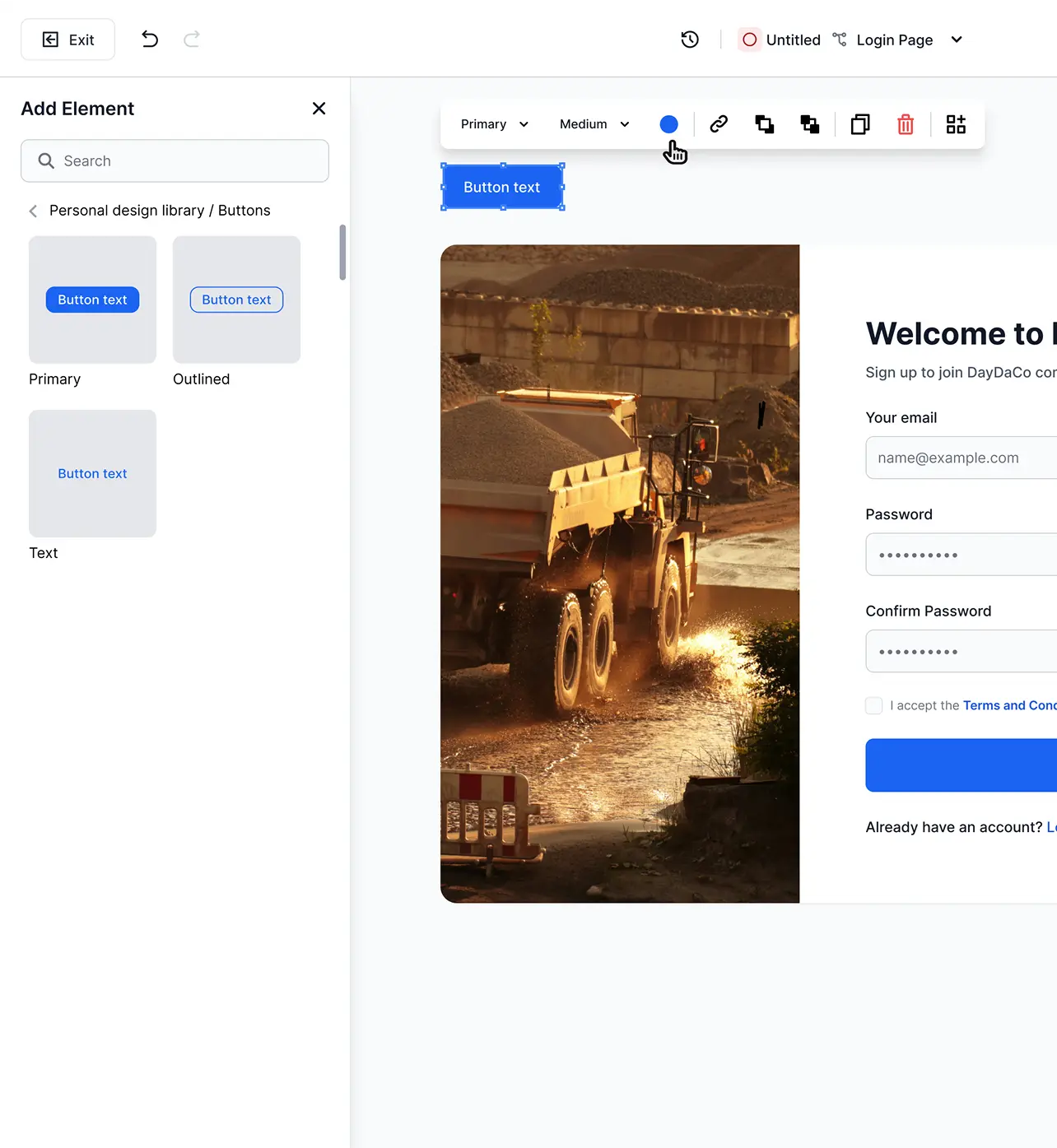
Non-technical teammates update copy, layout, and theme variables in a WYSIWYG canvas directly on your website. CodePress opens a branch + PR with clean, diff-friendly commits.
Approve & merge
Developers review atomic changes just like normal GitHub pull requests.
Pay as you go or reserve an agent
No base subscription. Pay $4 per agent-hour on demand, or reserve a dedicated agent for a monthly or annual term at a discount.
Pay for your own tokens
Use CodePress-managed models at the provider's cost, or connect your own API key or supported model subscription.
CodePress-managed models
Provider token cost
Pay the model provider's token cost with 0% CodePress markup. Model usage is separate from agent compute.
Bring your own
API key or subscription
Connect your own API key or a supported ChatGPT or Claude subscription. That model usage stays with your provider.